Joseff Betancourt AI Platform Architect

I build software platforms at 10× speed. My governed AI production system has delivered 30–50× faster than traditional forecasts in observed runs—without trading away production quality.

I turn complex architecture into production software using governed AI, developer platforms, and durable infrastructure.

Illustrated portrait of Joseff Betancourt wearing a green beanie and headset

Architecture is only useful when the system runs.

Joseff

Featured work

Three projects. Real code.

I like systems with clear edges, useful records, and fewer places to hide a bad decision.

01 AI governance

Agent governance

Agent System

A context-aware governance and orchestration system that injects the right rules at the right time, keeping multi-agent engineering bounded, observable, and moving.

On GitHub
02 AI Provider Router

KEEP NATIVE CODEX. ADD PROVIDER CHOICE.

Provider Shim

A local compatibility layer that keeps the native Codex workflow while routing requests across OpenAI, DeepSeek, and configured local models.

View on GitHub
03 AI harness

Enterprise AI platform

Local Codex for Enterprise

A self-hosted AI development platform for teams that need local inference, clear access boundaries, and an auditable trail.

On GitHub

Writing & methods

Methods for AI-assisted delivery that hold up.

Practical frameworks for estimating, governing, and delivering software with AI.

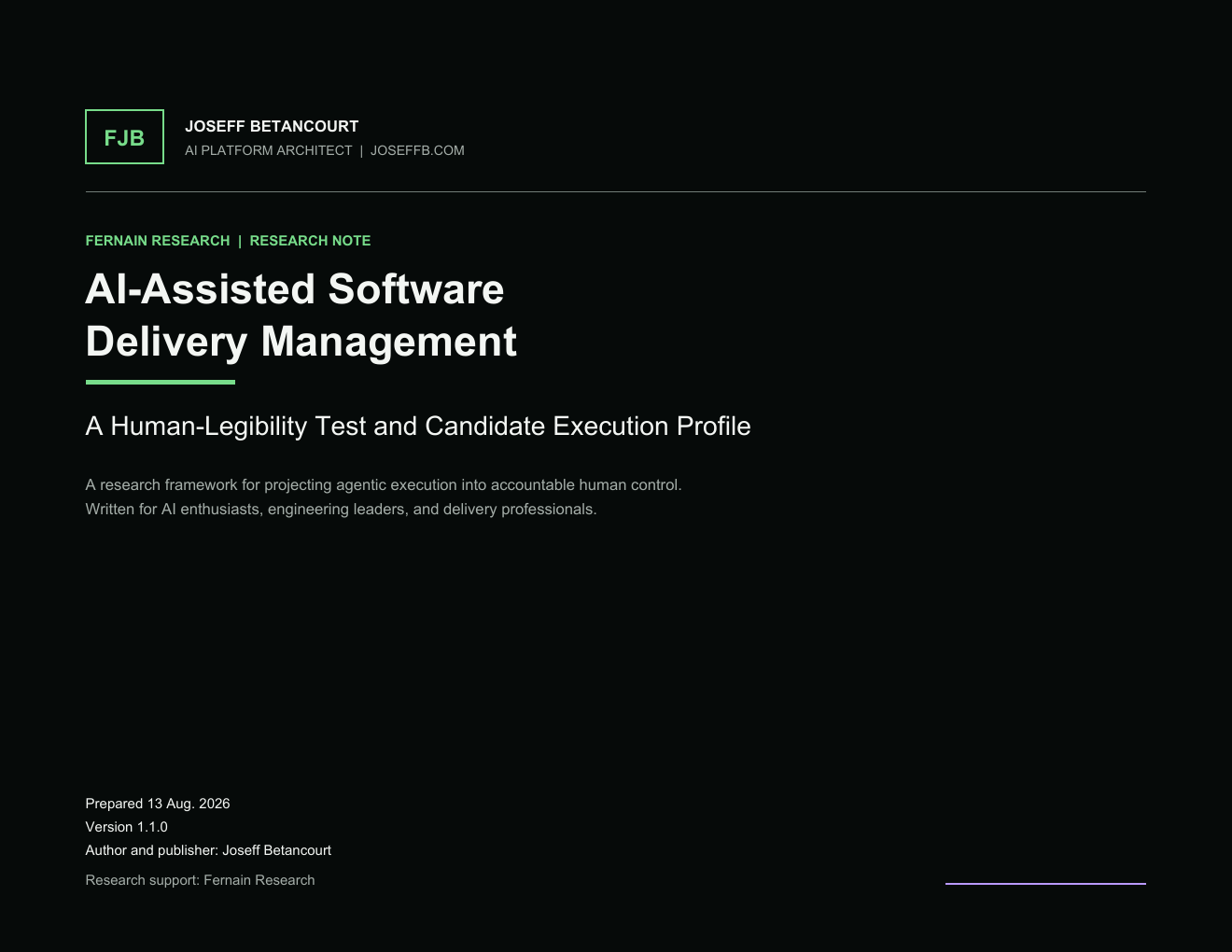
Cover of AI-Assisted Software Delivery Management by Joseff Betancourt
Research note Version 1.1.0

AI-assisted delivery management

AI-Assisted Software Delivery Management

Manage AI work without pretending agent activity equals delivery.

A research note testing that premise through a practical AI Delivery Execution Profile layered on established delivery methods, with human ownership, attempt lineage, evidence-bound acceptance, separate clocks, and cost per accepted outcome.

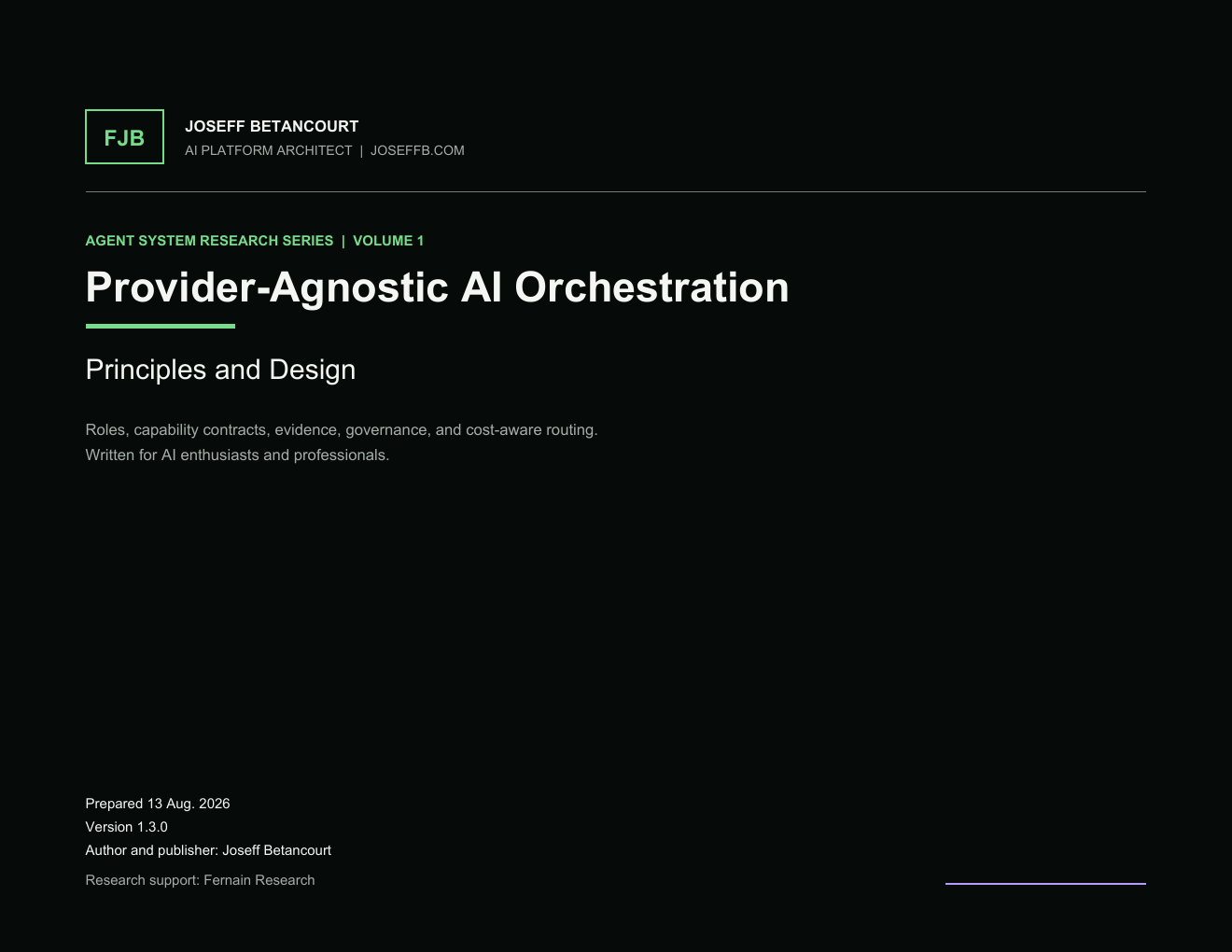
Cover of Provider-Agnostic AI Orchestration by Joseff Betancourt
Research note Version 1.3.0

Provider-agnostic AI orchestration

Provider-Agnostic AI Orchestration

Route work by role, evidence, and cost - not provider loyalty.

A provider-agnostic candidate framework for assigning stable roles and contracts across cloud and local execution, while preserving human authority and requiring evidence at acceptance gates. It is not a provider benchmark.

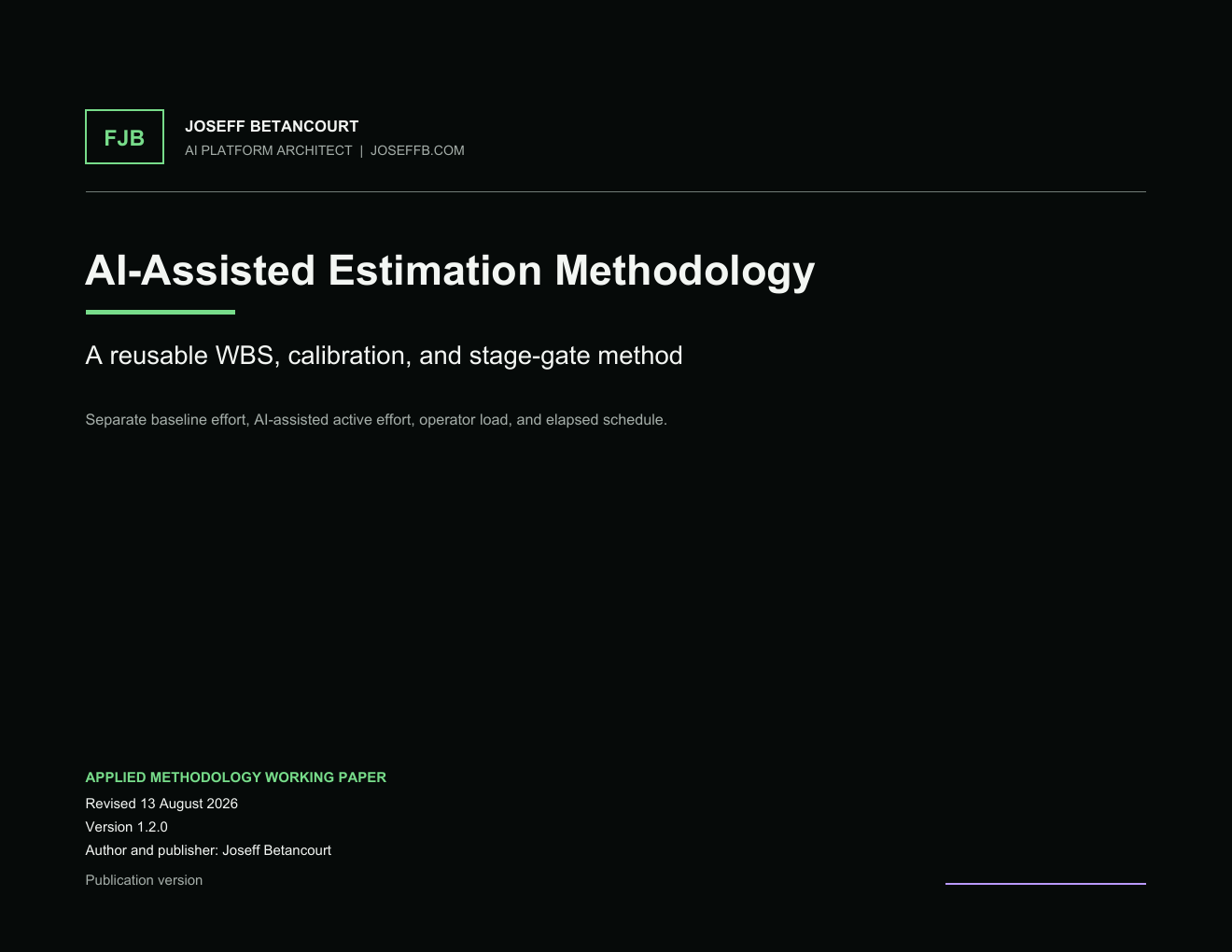
Cover of AI-Assisted Estimation Methodology by Joseff Betancourt
Methodology Version 1.2.0

Applied methodology

AI-Assisted Estimation Methodology

Estimate delivery without confusing AI speed with human capacity or elapsed schedule.

A practical methodology that separates baseline effort, operator load, AI execution, validation, and elapsed schedule so teams can test assumptions before making delivery commitments.

About

Architecture is only useful when the system runs.

I built my career as a senior software engineer in New York City. Now I’m helping define what AI platform architecture looks like in practice: drawing the boundaries, building the system, and staying with it until real people can use it.

Years of product and project work taught me to weigh the business case with the technical one. Good architecture should earn its keep.

How I build

A few rules I keep close.

  1. 01

    Start with the problem.

    Know the boundary and acceptance criteria before building.

  2. 02

    Engineer the work, not just the code.

    AI can execute at enormous speed. I still own architecture, direction, and result.

  3. 03

    Keep the system legible.

    Fast delivery is useless if the next engineer can’t understand it.

  4. 04

    Prove what ships.

    Test-first where practical, then human QA and acceptance. Working code still needs evidence.

  5. 05

    Build for the Tuesday after launch.

    The system has to survive production, maintenance, and change—not just the demo.